How to allow RDP connections
If someone have performance problems opening a Windows Virtual Machine using Spice, one possible solution is to use a RDP connection instead of Spice.
Steps to open RDP
Configure RDP Display
Allow RDP connections
Step 1: Configure RDP Display
Edit the virtual machine settings clicking in the name in the admin machines page. Go to the Hardware tab and add a new display for ‘Windows RDP’
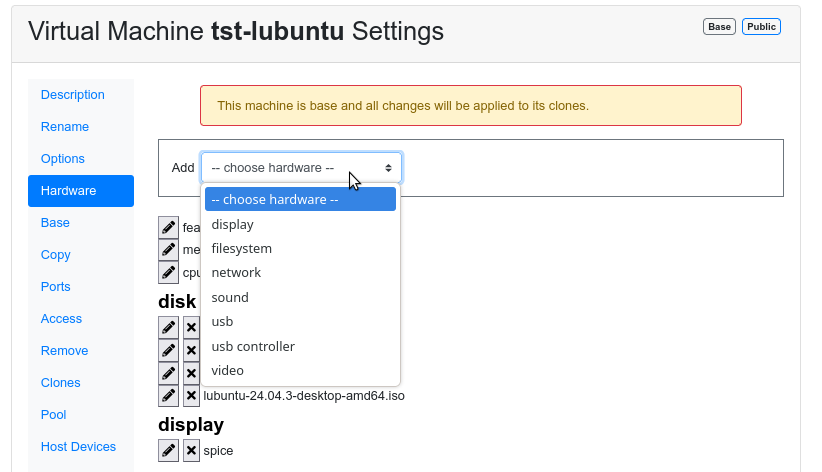
Yo do not need to add the display in each Virtual Machine clone. Setting the RDP in the base replicates this configuration to all the clones. This works even after the clones have been created.
Now you should have two ways to access the virtual machine display: SPICE and RDP. SPICE will always work because it is a virtual hardware available on startup. RDP requires the virtual machine to properly launch and start the RDP service. Once you are sure RDP works, you may want to remove the SPICE display to make it easier for your users.
Step 2: Allow RDP connections
Once the display is configured, you need to enable RDP connections to the virtual machine. This may require install or enable RDP service.
RDP for Windows
In the virtual machine, enable Windows RDP protocol.
You may want to open the windows menu and search for the “Remote Desktop Configuration”. Enable the RDP access there.
Follow this official Microsoft guide: Windows remote desktop.
Sometimes RDP will not work or requires extra settings in the virtual machine.
Allow remote assistance
Allow remote connections
Disable Allow only connections from computers that execute remote desktop with network level authentication
If it still is not working, check in “Local Services” and make sure those are enabled:
Remote Desktop Configuration
Remote Desktop Services
RDP for Linux
RDP for Linux requires the installation of xrdp package.
sudo apt install xrdp
For optimal performance to remote locations it is advisable to tune down security and graphics. Edit the file /etc/xrdp/xrdp.ini
crypt_level=low
max_bpp=16
Open the Virtual Machine with a RDP client
Clicking the View button should launch the remote desktop client with the proper connections settings.
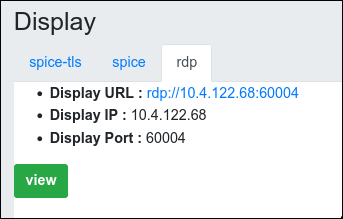
If you open your RDP client manually, pay attention to the port number.
In the next list you have the recommended software to do a RDP connection with 3 Operating Systems:
Linux: Remmina.
Windows: Included in the System as Remote Desktop, more information.
MacOSX: Microsoft Remote Desktop.
In this link are other RDP clients, depending on differents Operating Systems.
Troubleshooting
RDP port appears down
Make sure the service is running in the virtual machine
Check there is not a firewall in the virtual machine that blocks RDP
Review the previous steps and make sure everything is installed and running
If you check the service is running but the port keeps showing as down when starting the machine, check the host iptables.
-A INPUT -s 192.168.122.0/24 -i virbr0 -j ACCEPT
-A OUTPUT -s 192.168.122.0/24 -o virbr0 -j ACCEPT
Linux: Authentication Required to Create Managed Color Device
When the user logs in with RDP in a Linux Machine it gets a warning and requires authentication for the Managed Color Device.
To disable this message create the file /etc/polkit-1/localauthority.conf.d/02-allow-colord.conf
polkit.addRule(function(action, subject) {
if ((action.id == "org.freedesktop.color-manager.create-device" ||
action.id == "org.freedesktop.color-manager.create-profile" ||
action.id == "org.freedesktop.color-manager.delete-device" ||
action.id == "org.freedesktop.color-manager.delete-profile" ||
action.id == "org.freedesktop.color-manager.modify-device" ||
action.id == "org.freedesktop.color-manager.modify-profile") &&
subject.isInGroup("{users}")) {
return polkit.Result.YES;
}
});
And reboot.